Wicklesham Pit: why I opposed the planning application
Wicklesham Quarry near Faringdon is a site of global geological importance. When a planning application came before the committee, I went with an open mind — and left with serious concerns.
Wicklesham Pit: Why I Opposed the Planning Application
On January 19th I was taken by wheelchair from my hospital bed in the Churchill Cancer and Haematology Hospital to County Hall in central Oxford, so that I could participate in the Planning and Regulation Committee Meeting. The Senior Planning Officer had already come to the Churchill Hospital to brief me on the application ahead of the meeting. His kindness and dedication to the task in hand will stay with me for as long as I have left.
I want to be honest with you: I went to the planning committee with a genuinely open mind. I had read the papers, I had considered the arguments on both sides, and I was prepared to be persuaded either way. In the end, I voted to oppose the Wicklesham application. Here is why.
What Is Wicklesham Pit?
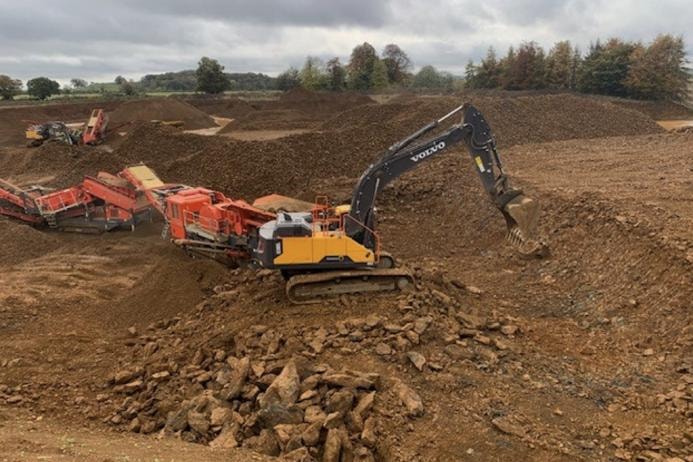
Wicklesham Quarry — known locally as Wicklesham Pit — sits just outside Faringdon in the Vale of White Horse, a part of Oxfordshire that falls within the county council's planning remit as the Minerals and Waste Planning Authority. The site was worked as a quarry for many years, but its significance today is not industrial. It is geological.
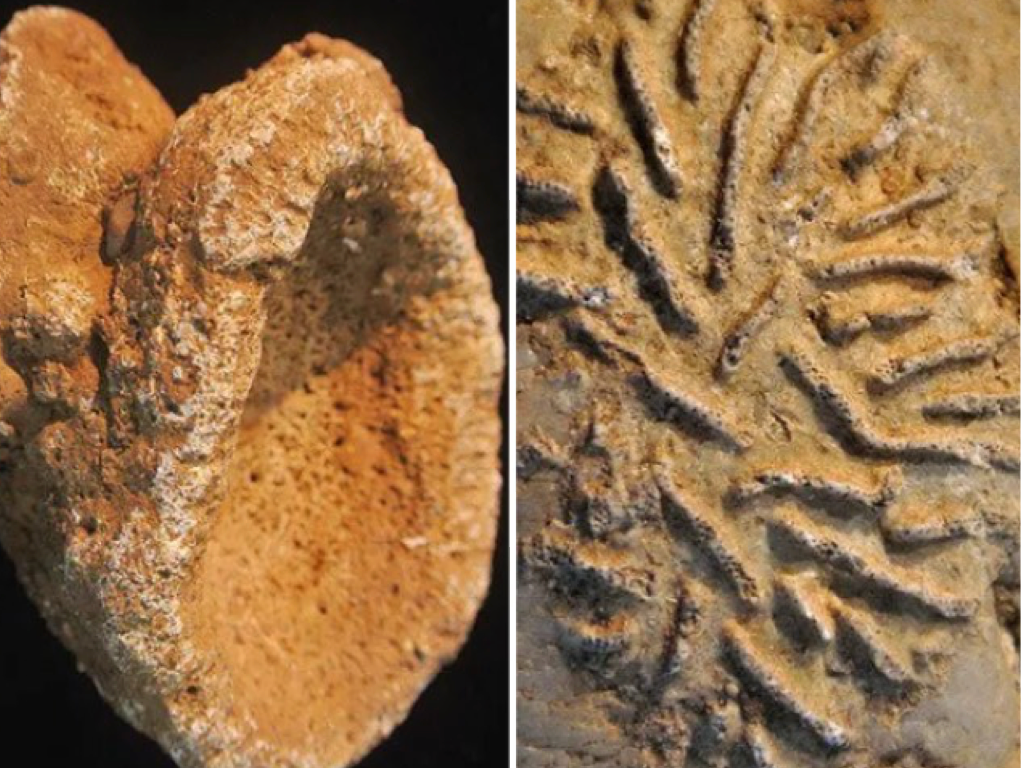
The pit contains fossil assemblages of exceptional quality and rarity. The site has been recognised at the highest levels of scientific importance — it is not merely of local or national interest, but of global geological significance. The rock formations and the fossils they contain offer a window into ancient environments and ecosystems that cannot be found in the same form anywhere else. That is not an exaggeration. It is the considered view of the scientific community.
The Application
The planning application proposed development on and around the site. I will not rehearse every detail of the proposal here — the planning documents are a matter of public record — but the broad thrust was to bring forward commercial building for life sciences at this location.
I approached the application asking myself a straightforward question: does this proposal treat the geological significance of the site, and the protections that flow from that significance, with the seriousness they deserve?
My honest answer was no.
Geological Significance and Its Protections
Sites of special scientific Interest (SSSI), and sites with international geological designations, carry protections for a reason. Those protections exist because once a geological feature is damaged or destroyed, it cannot be restored. You cannot un-quarry a fossil bed. You cannot recreate a Jurassic stratum that has been built over. The loss is permanent, and it is a loss not just for Oxfordshire but for science and for future generations.
I felt that the application did not engage with those protections with sufficient rigour. The geological significance of Wicklesham Pit was, in my view, treated as a constraint to be managed rather than a value to be respected. That distinction matters. Managing a constraint means doing the minimum necessary to satisfy a requirement. Respecting a value means asking whether the development is appropriate at all given what is at stake.
I did not feel the application had asked that harder question seriously enough.
Development of Faringdon, Not Development in Faringdon
My second concern was about the relationship between this proposed development and the town of Faringdon itself.
Faringdon is a market town with a functioning town centre — shops, services, community facilities, the kind of everyday infrastructure that holds a community together. Like many market towns in Oxfordshire, it faces real pressures. Footfall matters. The viability of local businesses depends on people choosing to use the town centre rather than travelling elsewhere.
A development of this kind, on the edge of town, risks what I would describe as denucleation — the hollowing out of the town centre by drawing residents, spending and activity away from it. A new development that is self-contained, that orients its users (in this case, workers who will invariably be from elsewhere) towards an onsite offering rather than Faringdon's delightful high street, does not strengthen the town. It weakens it.
The distinction I kept returning to was this: is this a development of Faringdon, or a development in Faringdon? A development of the town would reinforce and extend what the town already is — its character, its economy, its community life. A development in the town simply adds units to the map without meaningfully connecting to or investing in the place. Quite often development in, rather than of, means that money that is made locally is channelled elsewhere - not in the town.
I was not satisfied that this application was the former rather than the latter.
My Decision
I voted to oppose the application. I want to be clear that this was not a reflexive anti-development position. I understand that Oxfordshire needs high end work spaces. I understand that difficult decisions have to be made about where development goes. I do not oppose development in principle, and I do not think that every planning application near a sensitive site should automatically fail.
But the combination of factors here — the inadequate treatment of a site of genuine global geological importance, and the risk of further denucleating a market town that is already under pressure — led me to conclude that this particular application, in this particular form, was not one I could support.
If the applicants had made an application that took the geological protections seriously and had demonstrated a genuine commitment to strengthening, rather than weakening Faringdon's town centre, I would have probably supported the application.
The Outcome
The vote was a close one — a 6–5 majority in favour of the application. It was therefore resolved that the Committee approved the recommendation as stated, subject to further consideration of satisfactory highway treatments for crossing the A420 by highways officers, with the applicant and planning officers, which would come back to the Chair for consideration; and a 25-metre buffer zone on the Site of Special Scientific Interest. Oh well, you don't win them all. I just hope that the applicant will truly respect the geological exposures at the site during the construction phase. Of course, the geology underfoot will be built over.
Paul-Austin Sargent is the County Councillor for Banbury Grimsbury & Castle. He sits on the Planning & Regulation Committee and the various Health Scrutiny committees.
Explore Topics
Written by
Paul-Austin Sargent
County Councillor for Banbury Grimsbury & Castle, Oxfordshire County Council.