The Canal Corridor
The Oxford Canal towpath between Neithorpe and Nadkey is already part of two official walking routes. It is time we upgraded it to the active travel corridor it could be.
The Canal Corridor
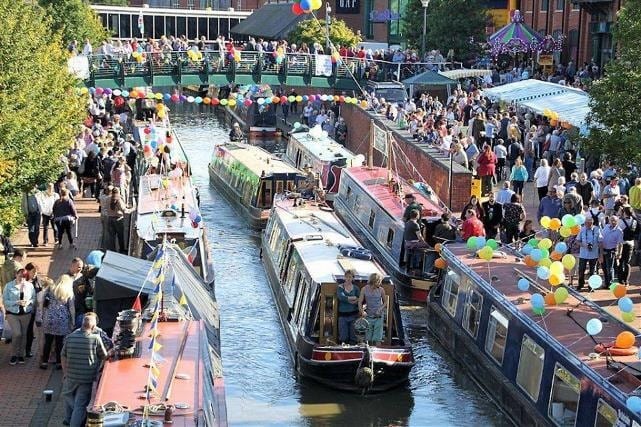
There is a tendency to think of the Oxford Canal as a leisure amenity — somewhere pleasant to walk the dog on a Sunday afternoon, or to watch narrowboats pass on a summer evening. That is understandable. The canal is genuinely beautiful, and the towpath between Neithorpe and Nadkey offers a stretch of green and blue space that is rare in any English market town.
But the canal is also a route. It has been used as one for centuries. And two established long-distance walking paths already recognise what local transport planning has been slow to acknowledge: that the towpath between Bridge 161 at Neithorpe and Bridge 172 at Nadkey is not just a pleasant walk — it could be a valuable active travel corridor waiting to be properly invested in.
The Jurassic Way
The Jurassic Way is an 88-mile long-distance walking route that begins at Castle Quay in the heart of Banbury and ends at Stamford in Lincolnshire. For the first stretch of its journey out of Banbury, the route follows the Oxford Canal northwards along the towpath, before turning east at Nadkey Bridge and heading out across the Northamptonshire countryside.
That starting point matters. The Jurassic Way does not begin at a car park on the edge of town. It begins in the town centre, at Castle Quay, and it uses the canal towpath as its first leg out of Banbury. The route was designed this way because the towpath provides exactly what a long-distance path needs at its start: a clear, traffic-free, navigable corridor that takes walkers directly from the urban core into the wider landscape.
The same qualities that make the Jurassic Way work as a walking route make the towpath work as an active travel corridor. It is direct. It is largely flat. It is separated from motor traffic. It connects the town centre to residential areas, employment sites and open countryside. The infrastructure for active travel is already there, in outline. What it lacks is the investment and maintenance that would make it genuinely usable year-round, by people of all ages and abilities, for everyday journeys as well as leisure.
The Banbury Fringe Circular
The Jurassic Way is not the only established route that depends on this stretch of towpath. The Banbury Fringe Circular is a 10-mile (16 km) walking route that loops around the town, taking in the canal, the surrounding countryside and the residential fringes of Banbury. The section of the Oxford Canal between Neithorpe Bridge and Nadkey Bridge forms a significant part of that circular route.
The Banbury Fringe Circular is a local route, designed for local people. It is the kind of walk that residents can do from their front door — no car required, no long drive to a trailhead. The fact that the towpath forms part of it is a reminder that the canal is not a peripheral feature of Banbury's geography. It runs through the town. It connects neighbourhoods. It is already woven into the way people move around and experience the place.
What this means for active travel
The existence of these two routes is not just a point of interest for walkers. It is an argument for investment.
When a stretch of path is already part of two routes, it is not speculative to suggest that it could function as an active travel corridor. The case has already been made, by the route designers and by the thousands of people who use these paths each year. The towpath between Neithorpe and Nadkey already carries pedestrian traffic for leisure, recreation and long-distance walking. The question is whether we are willing to invest in it sufficiently to extend that use to everyday journeys — to cycling, wheeling, and the kind of short, purposeful trips that currently default to the car.
Improved surfacing, better lighting at key points, and upgraded access at bridges and junctions would make a significant difference. These are not large-scale infrastructure projects. They are targeted improvements to an existing asset that is already doing useful work.
The Oxford Canal has been a working route for over two centuries. It is time our transport planning caught up with what the canal has always been.
Read more about the campaign for the Oxford Canal as an active travel corridor on the Towpath active travel page.
Explore Topics
Written by
Paul-Austin Sargent
County Councillor for Banbury Grimsbury & Castle, Oxfordshire County Council.